Skip to content
Reject Mediocrity

Client voices · 14 industries · In their own words

What the work sounds like after the standard holds.

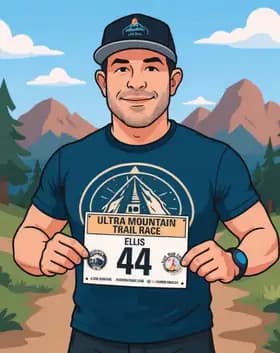
Ellis Franks runs the training. These are the people who hired him: founders, managing partners, superintendents, NOC leads, dealer principals, engineering managers, Ironman athletes, agency directors, and veteran program staff. Filter by industry. Read the problem they walked in with and what changed.

24 voices

Entrepreneurs·Keynote
Four hundred founders, most of them convinced they'd already figured it out. That was the crowd. He walked out, skipped the origin story, and opened with the question nobody in that ballroom wanted to hear. What's the ceiling on your company, and is it you? I sat there getting more irritated by the minute because he was right. My co-founder and I stayed up until one in the morning rebuilding our week. If you want somebody to tell founders they're special, there are a hundred speakers for that. If you want the truth told well, book this one.
Maya R.

Founder, consumer brand

Entrepreneurs·Small team training
Six of us, all wearing four hats, calling ourselves a company. I paid for a half day expecting a workshop with sticky notes. What I got felt more like an audit. He walked through where every decision was waiting on me, which meant it was waiting on my mood that day, and then made me write down the three things that would prove we'd actually changed. Not a mission statement. Three things you could check on a Friday. Two weeks later the calendar looked different, and so did our numbers. First training I've ever bought that was still working the following Monday.

Jon P.

Solo operator scaling a second company

Law·Offsite
Partners are, as a rule, poor students. We are accustomed to being the authority in whatever conversation we enter, and most facilitators either flatter that or wilt under it. Mr. Franks did neither. He structured the offsite the way one structures a matter: what is the evidence, what is the applicable standard, what is the next action. Our most productive originators stopped interrupting by the second hour. Two of our quieter partners raised the compensation issue that had been festering for years, and it was actually discussed. There was no trust exercise of any kind. Months later, his framework is still the vocabulary we use when we talk about origination credit, and in a partnership that is the only measure of whether a day like that was worth the fee.

Elena V.

Managing partner, mid-size firm

Law·Keynote
I've endured a decade of leadership keynotes. Most of them are a motivational talk with a better tailor. This wasn't. He spoke about influence in the terms we use for risk: it compounds, it's cheap to lose, and it's expensive to rebuild. Counsel don't need another parable about perseverance. What we needed was someone willing to tell a hall full of lawyers that being busy is not the same as accomplishing anything, and to make it land. People were quoting him at the coffee station afterward. In my experience that does not happen.

David K.

General counsel, regional enterprise

Construction·Leadership game
Figured it'd be a classroom deal. Sit there, PowerPoint, sign the sheet, go home. Nope. He ran that game on my supers and foremen like a bad Tuesday on a jobsite, just kept piling it on, and then sat back and watched who ducked, who pointed fingers, and who still made the call. Couple of my quiet guys wouldn't shut up. Couple of my loud guys went real quiet. We walked out with actual names for stuff we'd been writing off as personality. And he was on the floor with us the whole time, not up front by the screen. Supers can smell a guy who won't get dirty. He got dirty.

Marcus T.

Superintendent, commercial GC

Construction·Small team training
The project was on schedule and on budget and everybody on it hated each other. That was the situation when he came in for a day with the PM, the superintendent, and the trade leads. I braced for him to find a villain. What he showed us instead, pretty plainly, was how the trust between the office and the field had gone to zero and how that one thing was dragging every other number down. Then he gave us two practical fixes. A rule about how long a disagreement gets to sit before it's addressed face to face, and a written standard for handoffs between trades. I expected a pep talk. I got a repair manual. The job didn't get easier. It got honest, and honest jobs finish.

Priya S.

Project executive

Telecom·Small team training
NOC culture has a well-known bug. The engineer who heroically saves the outage at 3am gets the credit; the engineer who wrote the runbook that would have prevented it gets nothing. I've watched it for fifteen years. He ran a half day with my shift leads and flipped that incentive without one sports analogy I had to roll my eyes at. He gave my people a model for capacity versus incoming demand that they could actually argue with, and they did, which is how you know it's a real model. We came out with one rule: if the work isn't documented, it didn't happen. Ticket quality went up within the month. The drama around escalations went down. I'll take that over a trust fall.

Owen H.

Network operations lead

Telecom·Keynote
I'll be honest, I was ready to apologize to the techs before he even started. Our annual field meeting is a tough crowd. These are people who climb poles in February and sit in central offices nobody visits. They don't clap for fluff. About ten minutes in he's talking about how the standard is the standard whether you're the starter or the backup, and I watched two hundred people lean forward at once. They clapped. Real clapping, not polite clapping. Three of my supervisors cornered me afterward asking how to get Ellis out for a crew day. That's the whole review right there.

Nina C.

Regional VP, field operations

Data science·Small team training
Our problem was simple to state and hard to fix. The models were excellent and the decisions were late. He made no attempt to play statistician, which I appreciated. He asked three questions I couldn't answer cleanly. What deliverable counts as done? Who owns getting the result into a business decision? And why were we treating hours worked as evidence of progress? He ran the session like a design review, claims on the table, evidence or no credit. We now ship a one-page decision memo with every model. That single constraint has done more for us than three quarters of agile coaching, and I say that with the data.

Alex M.

Staff data scientist

Data science·Offsite
I booked Ellis against my own judgment. Analytics teams have zero patience for personality-driven training and I assumed that's what we'd get. Within ten minutes it was clear he wasn't going to perform for us, and that changed the temperature. His diagnosis was that we weren't underperforming, we were overloaded, and he made us cut scope before he'd let anyone talk about ambition. I still believe most leadership vendors are noise. This engagement produced a written operating agreement that my directors signed and, as of this writing, still follow. I'll take a signed document over inspiration every time.

Lina G.

Head of analytics

Car dealerships·Leadership game
Ellis ran a leadership game on my desk and my F&I guys. Took maybe four minutes to get competitive, that's just who we are. Then he flipped the whole thing. Turned out the guys winning the game were the same guys killing the store, protecting their own number while the process fell apart around them. That one stung. We rewrote how we run the board the very next morning. And here's the part I didn't see coming. He never once embarrassed my closers. Just put the process up on the wall where everybody could see it. My top salesman shook his hand on the way out. That guy doesn't thank anybody.

Chris D.

General sales manager

Car dealerships·Executive session
Before we rolled anything out to the floor I wanted a private session, one on one, to make sure this person understood what a rooftop actually is, which is a culture with a P&L attached. He did. The questions he asked were the ones I'd been avoiding. Where is my ceiling. Who is actually in my inner circle. What am I tolerating from managers because they move units. It was uncomfortable and it was accurate. We came out with three non-negotiables for the management team and a firm rule about how the yelling gets handled. The store is quieter now. The month closes cleaner. I'll pay for that combination again.

Rachel B.

Dealer principal

Technology teams·Small team training
I told HR I'd sit through it once and then we'd all go back to shipping code. He ran a session for my engineering managers and treated standup like a ledger. Who committed to what. What actually shipped. What was hiding behind 'blocked.' No personality assessments, no color quadrants. We adopted one rule out of it. A missed commitment gets named the same day, and there's no meeting about feelings afterward. Velocity didn't magically double. But honesty did, and that turns out to matter more. I still write software. I also run a much tighter team.

Samir A.

Engineering manager

Technology teams·Keynote
Our all-hands came after the worst quarter in company history. I needed someone who wouldn't tell the ICs they're family and wouldn't tell the managers they're victims of the roadmap. He framed the whole quarter as a race. Are we growing faster than the complexity we just shipped, or is it growing faster than us? People recognized their own teams in it. Two directors asked for coaching the same week, unprompted. If your engineering org is drowning in tooling and starving for a clear standard, this is who you put on stage.

Hannah L.

CTO, growth-stage product company

Ironman athletes·Race day
He was out on the course with me. Not cheering, coaching, and he's already paid for the full distance in his own legs so it counts. Mile 18 of the run I started making deals with myself, the way you do. No slogan from him. Just the next aid station, and a reminder of what we'd agreed to back in March. I finished. I also came away knowing the difference between pain that's just the work and pain that's a medical decision, which is the reason I'm still training. Race-day Ellis and training-week Ellis are the same person. The bar never moves.

Derek W.

Age-group Ironman, first 140.6

Ironman athletes·Race day
Fit body, messy head. That was me going into my first full. Race morning he was so calm it made my nervous system calm down too, which I didn't know was possible. The bike was a lesson in controlling what I could control. The run was a lesson in not turning into a coward just because I was tired. Somewhere around mile 20 I actually laughed out loud, which I'm pretty sure isn't allowed. The way he coached the whole week was the way he coached the day. The bar stays where it is, we just take smaller steps to get there. I have a medal now and a much better relationship with hard days. Both matter to me.

Sofia N.

Triathlete, 70.3 to 140.6 jump

Government·Keynote
There are things a public agency cannot do, and a rah-rah session is one of them. He understood that and kept the leadership day for our mid-level managers inside what we can actually act on, meaning process, succession planning, and what it costs an organization when trust between levels erodes. At no point did he suggest we disrupt a statute. He asked us to stop mistaking activity for accomplishment, in a building that tends to reward both equally. The question-and-answer period was the strongest part of the day. He answered like a person who has led under pressure, because he has.

Paul J.

Program director, state agency

Government·Small team training
My unit had just come through a rough leadership change and we were, to put it kindly, polite and ineffective. Ellis came in for a morning and named that without embarrassing a single person, which I didn't think was possible. Then he had us each write down three things that would be true by Friday if we actually meant what our mission statement says. Small things. Things you could see. We hit two out of three that week. That's more than we'd accomplished in a month of meetings. There's a sticky note on my monitor that says show me the work. I look at it every day.

Keisha M.

Team lead, municipal operations

Veteran services·Offsite
Civilian trainers tend to get strange around veterans. Either they overcompensate or they tiptoe. This one just talked to us like adults, and it helped that he's one of us and didn't wear it like a costume. My staff have heard every possible speech about translating military experience. What they hadn't heard was a straight talk about the small percentage of people who drag a culture down and the even smaller percentage who bring everyone else back up, and what a leader owes each group. He covered it without borrowing anyone's valor and without selling anyone's trauma. That's a narrow road to walk. He walked it.

Ray C.

Director, veteran employment program

Veteran services·Small team training
My peer support team was burning out on everybody else's emergencies. Everyone knew it and nobody knew what to do about it. There was no gratitude talk. He cut our caseload expectations down to something a human can carry, named the cost every crisis takes out of the person responding to it, and built us a rule so that grief stays a case and doesn't become who we are. It was the first time a leadership session felt like it was written for people who do what we do. When a case goes sideways now I can still hear him. Handle the next thing, then write it down. We're still here. Every one of us. That is not nothing.

Dana F.

Peer support coordinator

Education·Keynote
Teachers have a professional immune system against outside speakers, and it kicks in about ninety seconds into the in-service. He got past it. He talked about how perfect practice makes permanent, and how that includes every bad habit we rehearse in the hallway between bells. Faculty stayed after to talk with him. On a Friday. My English department chair told me he was the first speaker in years who sounded like a coach instead of a consultant, and she has strong opinions on the subject. We've already booked Ellis for a smaller day with the leadership team.

Tom B.

High school principal

Healthcare·Executive session
A year of turnover on my unit, and no amount of pizza in the break room was going to fix it. In our session Ellis looked at the floor the way I'd look at a patient. A system under stress, not a bad attitude. We mapped who actually carries influence on nights, who the ceiling is, and which of my so-called high performers was quietly teaching the wrong standard to every new grad. Then we built a three-item daily list that fits inside a twelve-hour shift. My charge nurses bought in because it was operational, not inspirational. Census didn't get any lighter. The unit got sturdier.

Amira S.

Nurse manager

Sales·Leadership game
Ran it at our QBR. Salespeople will turn anything into a competition, so I figured it'd be an hour of entertainment. What he'd actually done was rig the game so that the winning strategy inside it was the losing strategy in the real market. Defend your own number and let the process die. When my reps figured that out you could hear it. We changed how we forecast the following week. If your sales floor is loud and your pipeline is fiction, this is the fix.

Vic L.

VP of sales, B2B

First responders·Small team training
Had a shift that was excellent on calls and mean as hell in the station. He didn't lecture us about being nice. Talked about how a crew holds together when the tones drop, then asked whether we held together the same way when nobody from outside was watching. Fair question for a firehouse. Nobody had a good answer. We left with a rule for how we talk after a bad call and how we bring up a probie. Guy's got the military time and the endurance racing, and it shows. Nobody felt talked down to. That's rare with outside trainers. Real rare.

Gabe R.

Shift captain

Bring the same standard to your team.

Keynote, small team, leadership game, race week, or a private session. Ellis runs it.

Reject Mediocrity Philosophy

Build strong daily habits while taking massive actions towards objectives that challenge you daily in pursuit of goals that others fear while maintaining a play-to-win mindset and developing the whole person of body-mind-spirit.

Hours

Monday — Friday · 6:30am — 11:00pm

Contact

(832) 598-7598

Message us
What. When. Where. How. Who.